Electric car efficiency in winter: how can we improve it?
Delyan Dimitrov5 min read
What determines an electric car's efficiency?
The efficiency of an electric car depends on several factors. One of them is how you drive. Aggressive acceleration and sustained high-speed driving can lead to much higher electricity consumption. The second factor affecting an electric car's efficiency is the weight of the vehicle. Other important factors are the weather conditions and the road surface. Outside temperature and climbs can both affect electricity consumption.
External conditions such as temperature and the weather have the greatest influence on the efficiency of electric cars. For example, a temperature that is too high or too low can reduce the efficiency of the battery, with higher energy consumption as the result.
At the same time, using the car's air conditioning or heating system can increase energy consumption. Because of these factors, electric car drivers need to keep this in mind when planning a journey and choosing charging stations.
Electric cars in winter: how much does their range fall?
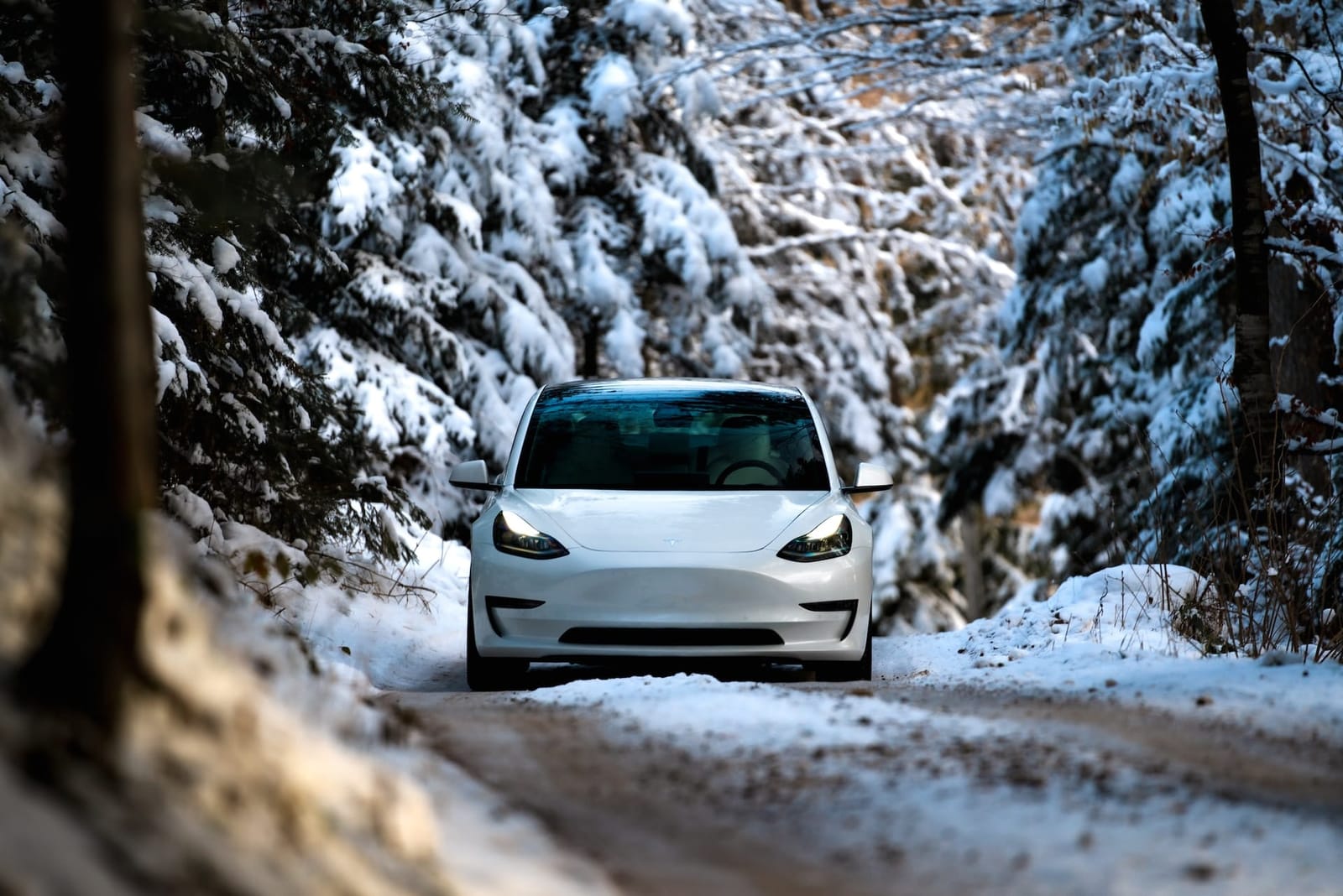
Electric cars enjoy great popularity for being environmentally friendly, economical and innovative, but when it comes to winter conditions they face some challenges. Cold weather can reduce an electric car's range, because more electricity is used to heat the batteries and because batteries are less efficient at low temperatures.
As a result, an electric car's range can fall by up to 50% in cold weather. To cope with these conditions, electric car manufacturers have developed a range of features that optimise resources and deliver longer range even at low temperatures. In addition, special systems have been developed for charging electric car batteries at low temperatures, along with various technologies for improving the efficiency of electric cars in different weather conditions.
Tesla – how much did range fall?
Electricity consumption rises when the heating system is in use, and batteries are less efficient at low temperatures. The result is that an electric car's range falls, especially in cold weather.
For example, a Tesla Model 3 usually has a range of around 400–480 km in summer conditions, but that range can drop to around 300 km in winter conditions. To offset that drop, electric car owners often have to use the preconditioning features and charge the battery to 100% overnight, despite the manufacturers' recommendations, if they want to increase their winter range.
In testing, the Tesla Model Y performs well. At an observed consumption of 15.9 kWh per 100 kilometres, we calculate a potential range of 501.44 km in the 21–24 degree temperature range, against a projected 361.12 km in the −6 to −9 degree range (22 kWh per 100 kilometres), which represents a 28% reduction in range.
Optimise your range
There are several tips you can follow to optimise your range in winter:
1. Plug in and warm the car up
Our first tip is to precondition your electric car while it is still plugged in at home. It sounds silly, but heating the car uses a lot of energy. If you do this before unplugging your electric car from the grid, you will use energy from the grid instead of draining your car's battery. That means you can simply step into a warm car with a full charge.
It is also worth noting that you can use this trick anywhere you choose to charge your car. Does your workplace have charging stations? If so, why not take advantage and warm the car up before you leave?
2. Slow down and use eco mode
It may sound obvious, but the faster you drive, the less efficient the car will be. That applies to combustion cars and electric ones alike. Reducing your speed from 130 to 110 km/h on the motorway can really help increase the car's range. It can also make driving safer in snowy or icy conditions.
In the same way, electric vehicles come with an eco driving mode. It will increase range and reduce energy consumption. You can use it all year round, but in winter you will really feel the benefit of eco mode.
3. Keep the battery charged
When it comes to charging an electric car, we always recommend keeping the battery charged. Most electric car manufacturers recommend keeping the battery between 20 and 80% whenever possible.
When it is very cold, the car's battery management system will hold back around 15–20% of the battery's capacity to keep it warm. If you can, charge to 100% before setting off; that will help offset the range you may lose warming the car up.
4. Check your tyres
Tyres are a key part of how a car performs, whether it is petrol, diesel or electric. When the temperature starts to fall, you will notice that the air in the tyres contracts and the pressure drops.
Check your tyre pressures through the winter to make sure they are inflated to the correct level for your car.
Electric car range in winter: is there a future or not?
The conclusion on electric car range in winter is that, compared with traditional combustion cars (petrol, diesel), they have less range because batteries deplete faster at low temperatures. Even so, as battery technology develops and heating systems improve, electric car manufacturers are working hard to reduce that drawback. The forecast for the future is that, as science and engineering advance, electric cars will have significantly better winter range.
More efficient and more durable batteries are also expected to be developed, delivering longer range on a single charge even at low temperatures.